A few years ago, at the Hershorn Art Museum in Washington DC, I had the privilege of viewing an exhibit by The Guerilla Girls informing visitors on the gender demographics of artists and art within the museum.
One of the pieces of information that stuck out to me the most was that within the Modern Art section of the Met, only 5% of the works featured are made by women, yet 85% of the nude pieces depict women. As suggested by the statistic, the easiest way for women to get in is to be without clothing.
This shows how in museums, galleries, and other artistic spaces, women are grossly underrepresented as creators, and overrepresented as the muses of men, which is a traditional role of women in said spaces.
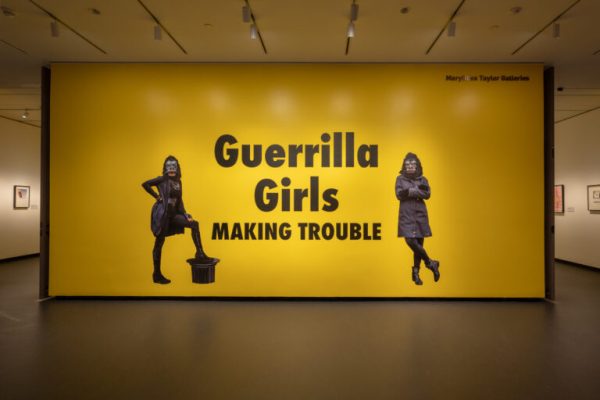
After seeing this exhibit, I began to research the Guerilla Girls as an organization, and discovered that their work extends all over the globe. The group was formed in the 1980s by female artists protesting the treatment of women in the arts. They are known for bright, flashy displays that directly call out galleries.
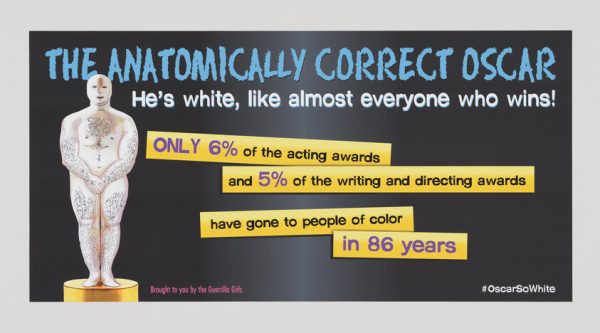
The Guerilla Girls also apply their criticisms to other artistic worlds, including acting. In 1989, they made a billboard titled “The Anatomically Correct Oscar,” showing a rather obese man depicted as the trophy given to Oscar recipients. The billboard included the statistics from the time, including that a woman had never received best director and 94% of writing awards are given to men.
Evidently, gender inequality is still a prevalent issue in the arts, and likely will be for the foreseeable future if it is continuously overlooked. Women currently represent around 65% of art students in the United States, yet the pay gap for female artists is even larger than that of women in most other professions. On average, women are paid typically only one third of what a male artist makes.
Art and the art industry has always been known to be more progressive than other fields, yet the mistreatment of female artists blatantly suggests otherwise. There is an unprecedented amount of progress to be made by artists, museums, and communities to uplift female artists and ensure equal treatment.