
This past fall and winter, The Museum of the Shenandoah Valley displayed an exhibit dedicated to the life of Frida Kahlo through photography, capturing both artistic and intimate moments of her life.
Similarly, the Virginia Museum of Fine Arts in Richmond showed an exhibition of many of her and her husband’s paintings over the summer. They allow a look into two of the greatest artistic minds and the complicated marriage they endured together, which shaped the art world for decades to come.
Frida Kahlo and Diego Rivera’s often tumultuous marriage was referred to as a union between “the elephant and the dove.” Joining together two of the greatest Mexican painters of all time and passionate members of the Mexican Communist Party, the marriage was revolutionary in both the political and artistic circles they operated in.
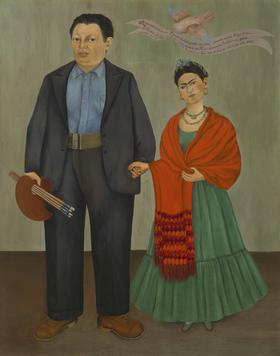
Yet, it was not without its fair share of scandal. Their marriage suffered numerous instances of infidelity, one divorce and a remarriage, yet their love and codependency inspired some of the most beautiful, moving works made by either artist.
One of the largest scandals of the union was when Rivera had an affair with Kahlo’s own sister, Cristina. Heartbroken by the betrayal, Kahlo initially separated from Rivera, although they later got back together.
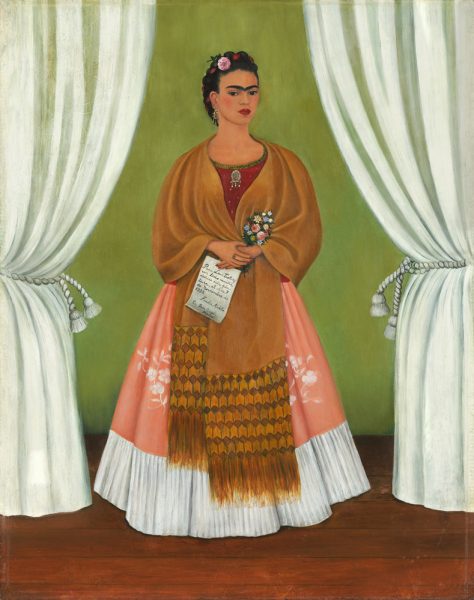
Fueled by sadness and seeking revenge, Kahlo began an affair with renowned Soviet Communist Leon Trotsky. Originally incentivized by intellectual agreement, the two were linked for only a few intense months while he lived in her family home in Mexico. Kahlo made him “Autorretrato dedicado a León Trotsky” (Self Portrait Dedicated to Leon Trotsky), yet refused to leave Rivera for him, as she did not think he could compare to how she felt for her husband.
Kahlo’s self portrait for Trotsky hangs permanently in the National Museum of Women in the Arts, located in Washington DC.
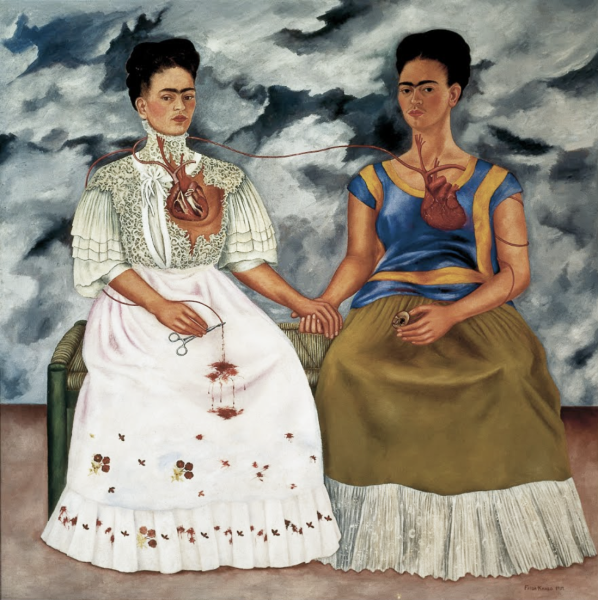
The affairs took a toll on the marriage, and the two decided to divorce in 1939. Kahlo’s feelings on the failing marriage and their divorce influenced one of her most famous pieces, “Las dos Fridas” (The Two Fridas). This painting depicts two versions of Kahlo, united by a broken and bleeding heart.
Yet, the divorce was short lived, as they remarried in 1940. This was in part to pose a united front for the Communist Party in Mexico, and also because the two believed they were incapable of existing or creating art without each other.
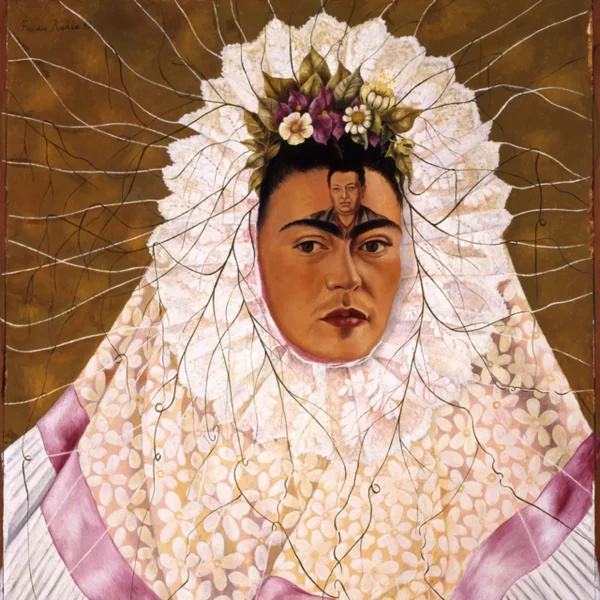
Kahlo featured her dependency on Rivera in her literal ways in her works. In one portrait titled “Diego en mi pensamiento” (Diego on My Mind), Kahlo paints a small portrait of Rivera on her forehead, showing how she finds herself unable to think of other things or people, and exemplifying the power he had in her artistic life.
The two of them immortalized each other in paintings that lived past their multiple marriages and numerous affairs. With their depictions of love for each other, their relationship lives on forever in the form of artwork.