With Drag superstar “Bob The Drag Queen” just finishing up their role as Harold Zidler and passing the torch to
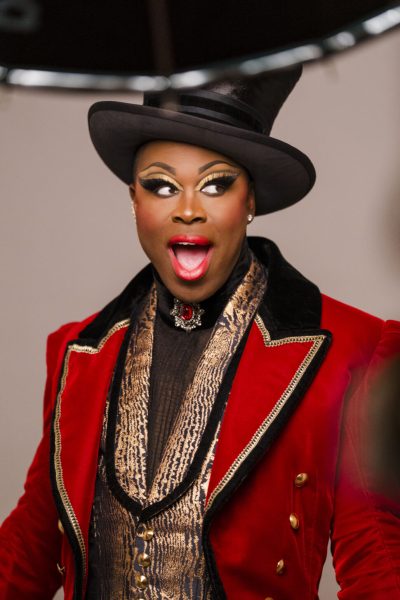
Megan Thee Stallion in “Moulin Rouge: The Musical,” I’ve been thinking about my favorite LGBTQ+ productions.
Bob’s success is deeply inspiring to many actors, as they are a nonbinary drag queen in a powerful role, representing the LGBTQ community beautifully. Bob rose to fame through season eight of “Rupaul’s Drag Race.” Spoiler alert: they became America’s next drag superstar. For my audience that doesn’t watch Drag Race, that means they won. Oh, and for my straight audience, equate it to say, winning the super bowl? Yeah. That works.
Here are some of my favorite LGBTQ+ productions. The ones that make me cry, laugh, sing and dance.
Come on, you had to know we were going to be talking about Falsettos. After all, it is one of the most influential LGBTQ productions.
This heartbreaking story covers family dynamics and queer love. Marvin leaves his family in order to freely be with his one true love, Whizzer.
The most important factor in Falsettos is that all of this occurs during the AIDS crisis, and it does a beautiful job shedding light and awareness on the topic. A central part of the story is when Whizzer is diagnosed with this disease.
Falsettos was ahead of its time, premiering in the early 90’s. There’s no question that it pushed the limits of heteronormativity and spread AIDS awareness, all while telling a beautiful story.
2. Cabaret
One place the gays love: the club. Most of us at least. Cabaret is a production about the fictional “Kit Kat” Club in Berlin during 1930.
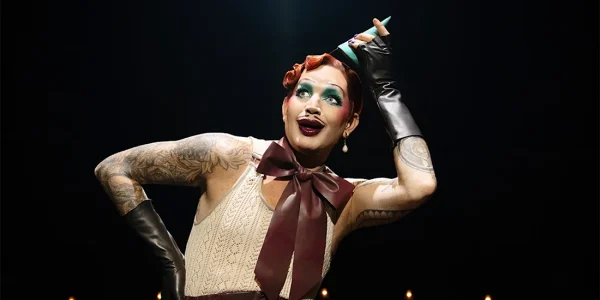
Cabaret follows Cliff Bradshaw and Sally Bowles, who are tangled in a complicated relationship; it explores their dynamics alongside many other characters.
It emphasizes themes of LGBTQ+ nightlife during one of the darkest times in history, when the Nazis began rising to power. It enlightens people on a horrifying period of life while representing an era of nightlife hedonism and burlesque dancing.
This show is based off of T.S. Eliot’s Old Possum’s Book of Practical Cats, as well as Andrew Lloyd Webber’s world-renowned famous production of Cats.
The Jellicle Ball is a celebration of queer history and, more specifically, ballroom culture.
Glitter, sparkles, vogue, dips, flips, spins, you name it. This ball features fierce icons in ballroom culture like Omari Wiles and Arturo Lyons. The Jellicle Ball is full of exhilaration, empowerment, community and pure joy.
4. Kinky Boots!
I’m sure you were waiting for this one. Yes, Kinky Boots is absolutely a classic iconic musical.
It follows the story of Charlie Price, who is forced to inherit his father’s shoe business in order to avoid bankruptcy. Price forms an unexpected friendship and partnership with drag queen Lola.
Kinky Boots is a beautiful story about acceptance, self-expression and open-mindedness. Lola teaches Charlie, and maybe even some audience members, how to love strongly, fiercely and proudly.
This show challenges every negative societal expectation and stereotype and transcends the boundaries of gender. Kinky Boots is the definition of love and acceptance.
5. Mean Girls
Yes, this is a fun one. Damian is a gay icon, what can I say? Yes, I included this just because of Damian being iconic.
He truly is a queer icon though. Damian is a walking stereotype of a gay person. Some of it is just quintessential high school gay teenager.
“And I want my pink shirt” is my favorite Damian quote for sure. His solo songs are also revolutionary though. “Stop” is theatrical perfection and “Where Do You Belong” is a must-listen.
Mean Girls follow Cady Heron, Regina George, Karen Smith, Gretchen Wieners, Janice Ian and our favorite: Damian Hubbard. This messy teen musical is all about high school drama and plays into the idea of cliques. Regina George is the queen bee, Janice and Damian are outcasts and Cady Heron is the new girl.
How far can high school drama go? Will the world burn?
Throughout all of these musicals, it is important to realize how long theatres have been a safe space for queer people; it’s a place of acceptance, community, talent and pride. It will never stop being a place of that nature and LGBTQ+ representation will always be important in these spaces.
Theatre is a home for a lot of us. Yes, we are dramatic and yes, we like to sing and dance.