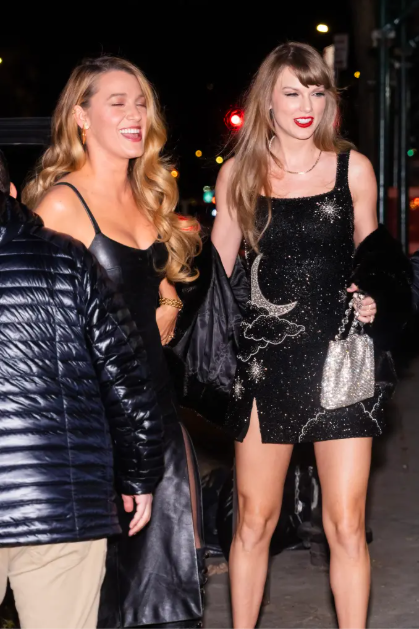
Celebrities are watched so closely that one slip-up leads to a world wide media rumble. A recent example of this is pop-star Taylor Swift and actress Blake Lively, who have been gaining attention and hate for their private text messages that were leaked to the public.
The messages show actor, and defendant in Blake Lively’s ongoing lawsuit, Jason Baldoni in a bad light. While some argue that Swift and Lively should be “cancelled,”, others say that the two’s texts are private and the public’s input is a complete violation of such privacy. No matter what, though, this conflict is a part of a continuous pattern of turning celebrity’s private moments into cultural events.
It is an often occurrence that people forget that celebrities, though influentially powerful, are simply just humans like the rest of us. Even if many aspiring children, young adults, or even elders may look up to them, it’s important to note that they too have flaws and are inherently imperfect. Isn’t that even more inspiring and meaningful?
Public figures who show their true selves, imperfections and all, show their fans that it is okay to not be perfect, and even to be different. This should be the type of expectations stars are held to. Not small waists or put-together outfits, but embracing and encouraging their vulnerabilities that make them human. In fact, holding public figures to unrealistic standards actually takes a toll on the obsessive fan.
This type of obsession with celebrity behavior and expectations is defined by psychologists as Celebrity Worship. Though this term may seem bazaar, it’s more common than you might think. Around 9% of young adults (18-34) express very high levels of Celebrity Worship.
This means that many young adults show a concerningly high emotionally intense connection to celebrities. Strangers are seen as familial role models, and held to expectations no lower than perfection.
Celebrity Worship is concerning beyond unhealthy relationships because it also takes a toll on mental health. It is often tied to social media addiction which leads to increased stress, anxiety, depression, and negative online behaviors.
In the situation of Taylor Swift and Blake Lively’s text messages being leaked, celebrity worshipers are dissatisfied with the star’s “Mean Girl Activity.” It is unfair to dehumanize these two women because they are chatting rudely about a man involved in their lawsuit. This should actually be an expectation for everyone because individuals shouldn’t be expected to get along with each other, especially when one of them is getting sued by the other. In this instance, Swift and Lively were not glorifying being mean. They were texting privately with each other and that should hurt their public figure.
It is in human nature to not get along with other people all the time. It has even been given a nickname, Tea Talking. It is also within human nature to be imperfect and flawed. Celebrities shouldn’t have to sacrifice humanity because the world made them famous. Pedestals create unrealistic expectations for celebrities, but also unhealthy behavior and effects for celebrity worshipers. It’s not good for anyone involved.