The Met Gala is famous for celebrities displaying extravagant high fashion. Each year, organizers choose a theme, and designers construct luxurious outfits in order to promote fashion and art preservation and raise money to support the Metropolitan Museum of Arts Costume Institute.
This year, the Met Gala was held on May 4 and the theme was “Costume Art” with the corresponding dress code of “Fashion is Art.” This focuses on the idea of the interconnection of fashion and craftsmanship and how each outfit should be treated as art.
We can see how many different designers followed this idea with inspiration coming from paintings, sculptures and even different forms of art, such as television and dance. Some designers focused on subjects featured in different works of art, while others followed the same artistic style of movements or artists.
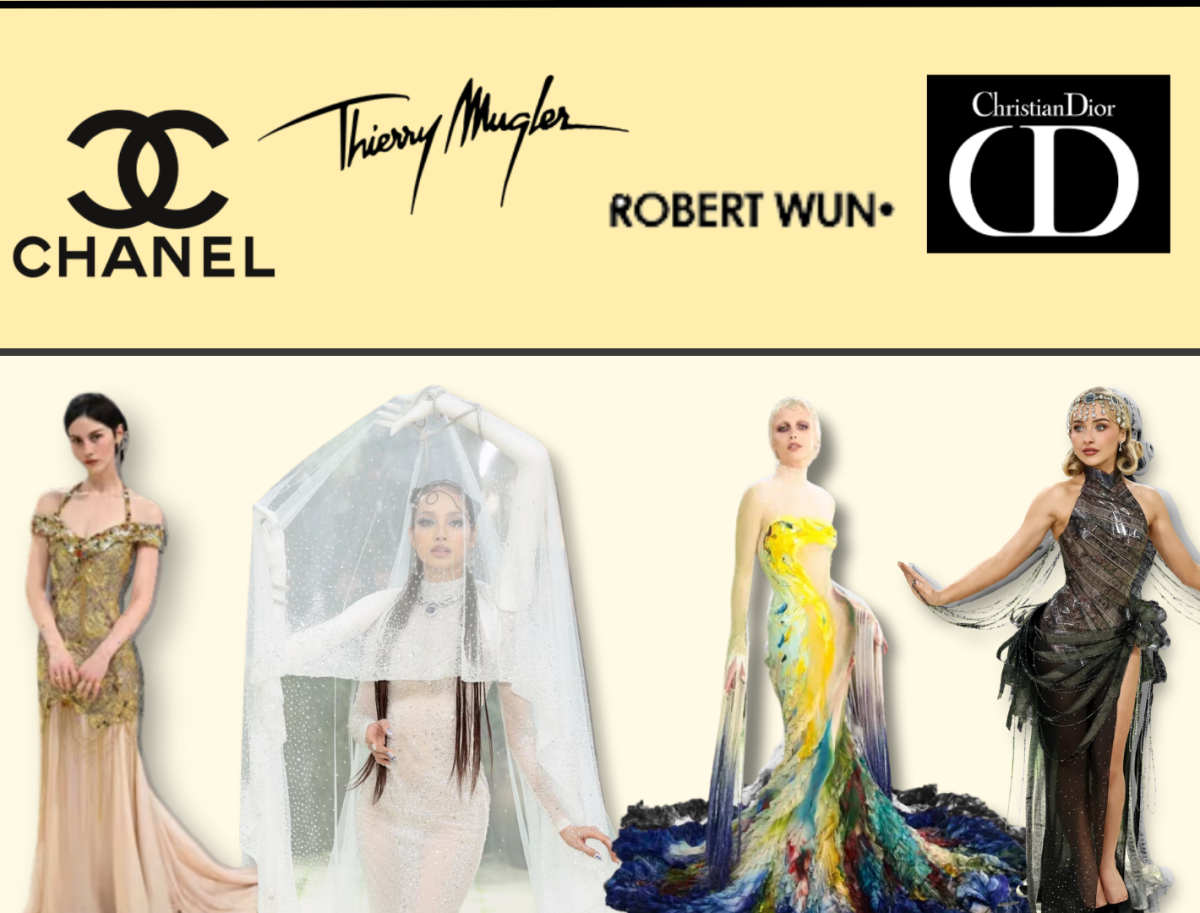
Sabrina Carpenter’s dress was custom Dior made from actual film strips from the 1954 movie “Sabrina.” Also, Lisa, a Thai singer, rapper and dancer, wore a dress created by Robert Wun that had 3D arms set in a traditional dance position.
With every outfit presented, a designer and team worked to create a true work of art to promote their work and fashion preservation.
Despite this event being to showcase work of designers, the majority of the public continues to offer credit to the celebrities. This undermines the effort and work that went into the creation of these ensembles.
When discussing the outfits shown at, not only the Met Gala, but many elite social events, this highlights how most of the time people associate the dress to the celebrity as opposed to the stylist that put work into making it what it is.
This is understandable, as many people may simply be uneducated about the designer or are unsure of who was behind the idea for the outfit. However, for events that are made to celebrate fashion and artistry, discussions of the designer should be more prominent.
Still, celebrities and models are extremely important in promoting fashion. Their popularity and admiration from the public is what brings attention to the clothing, and therefore to the designer and their work.
However, this does not mean more credit should be given to the celebrity, especially during events made to celebrate designers. When discussing an outfit, people are quick to simply discuss the celebrity and overlook the designer.
Miguel Castro Freitas designed a Mugler dress for Emma Chamberlain, and the majority of viewers agree it was one of the most outstanding dresses of the night. The dress was based on impressionist watercolor art, specifically referencing works from Vincent van Gogh. However, instead of praising Freitas and Mugler, people chose to focus on how Chamberlain was collectively labeled the best dressed. While she did look phenomenal, the significance of this look came from Mugler and the stylist.
Not to mention, people are offering more creative credit to Chamberlain when the vision and idea of the dress came from Freitas. Unfairly crediting the celebrity overlooks the designer’s creativity and vision for the theme and ignores the originality of the Frietas and van Gogh.
Oftentimes, celebrities have no say over the outfits they wear. This was apparent when an interviewer asked Gracie Abrams, who was wearing Chanel inspired by Gustav Klimt’s “Women in Gold,” what her favorite work from the artist was. Abrams was unable to give a specific answer and even butchered the pronunciation of Klimt.
This shows that the idea behind the look as well as the creation of the outfits comes directly from the designer’s vision. While many people are talking more about the celebrity, when discussing the dress, jewelry, hair and makeup, credit should be given to the stylist.