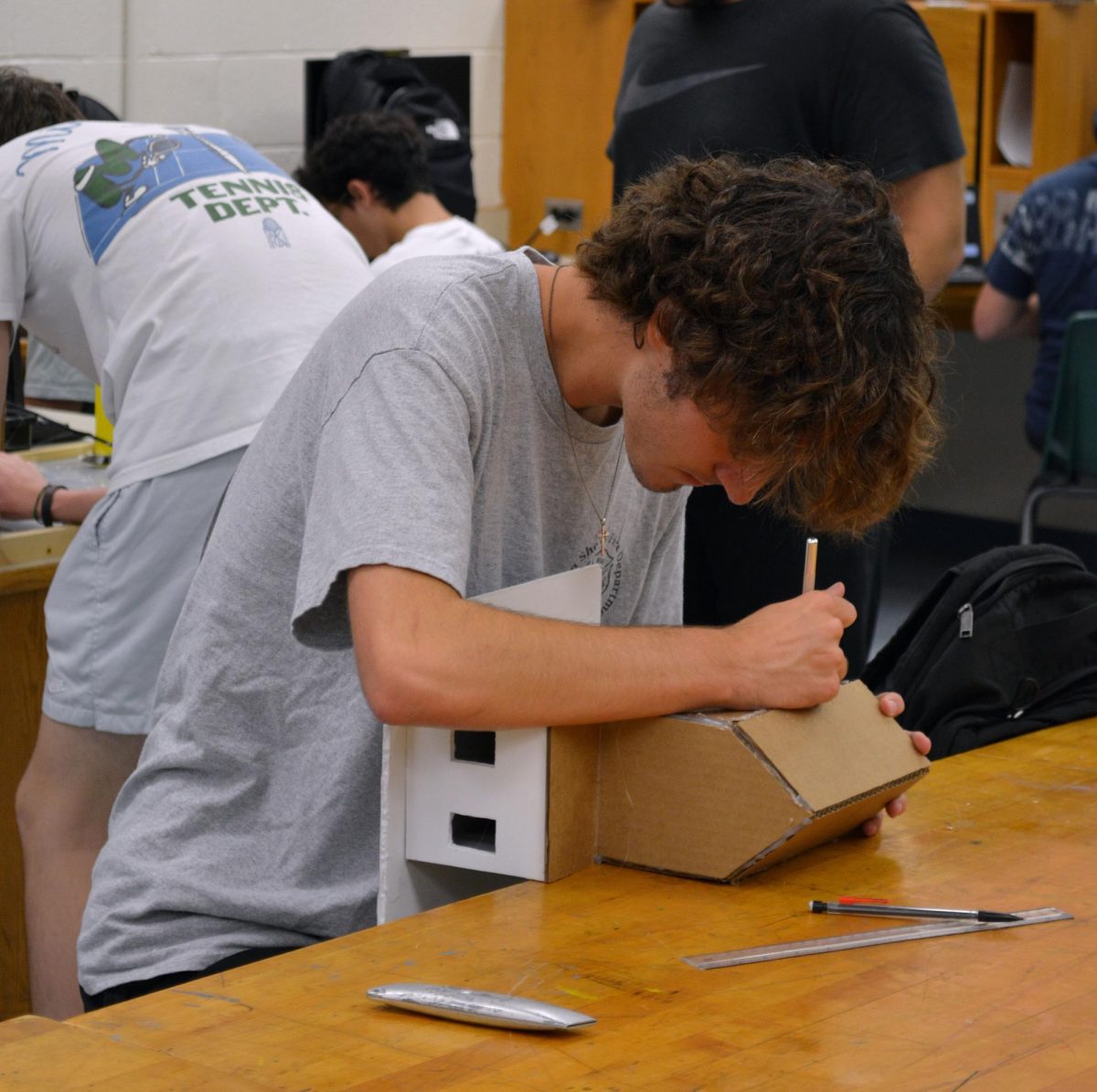
In light of ever-increasing tuition costs and rising popularity of technical careers, many high school students are choosing to attend trade school or community college instead of four year colleges.
A traditional college education has looked the same for decades: four years at either a public or private university, then graduate and find the job that gets your student loans paid off the fastest. Yet, many teenagers are rejecting this model in favor of alternative pathways.
These options provide many more pathways and opportunities to students, and in many cases are more adaptive to modern careers and the needs of today’s society.
Students should be seriously considering options that differ from four-year colleges and universities, especially if their desired career or diploma could be more responsibly achieved through trade school or community college.
One of the greatest factors driving teens away from traditional colleges and universities is the skyrocketing costs. Even at public institutions, it could cost into the hundreds of thousands of dollars for a degree earned over the course of four years without financial aid. This sum is unjustifiable for many students across various majors, as it is nearly impossible to pay off in the foreseeable future.
Because prospects are deterred by an inability or unwillingness to finance this education, many choose to attend community colleges or online universities, which provide the same degree at much lower costs.
Additionally, awareness of trade or technical school programs has spread to high schoolers through career luncheons and elective classes. This form of career training is better fit for those who wish to pursue blue collar careers like cosmetology, construction or plumbing. Choosing one of these careers and the training route that goes with it allows for flexibility, entrepreneurship and joining the workforce earlier than one would while obtaining a bachelor’s or higher level of degree.
Societal stigmas around blue collar work have also been less prevalent in recent years, meaning that peers, family and educators are less likely to diminish the aspirations of young people aiming to join the technical workforce. This was a necessary shift, seeing as blue collar employees make essential contributions to the maintenance of private and public facilities, and often go underappreciated.
There is also less stigma associated with community college graduates. While they were once looked down upon, they are now more respected, as community college is respected in many fields as a more responsible fiscal decision than the typical large university degree.
There are careers like doctors and lawyers that may see more benefit in the long-term investment of a four-year degree, but that is not the case to each individual.
There are many major differences in the careers and training of those who choose alternative pathways rather than four-year college. For example, it is much more feasible to graduate debt-free from a community college or technical school, which is a priority for lower or middle class students.
LCPS students may seek out technical education programs through the Monroe Advanced Technical Academy, also known as MATA, where they can gain skills in a variety of fields, and in many cases enter the workforce immediately after graduating high school.
Students may also choose to obtain a degree from NOVA Community College, or alternatively attend NOVA for two years before transferring to UVA, VCU or over 30 other public universities in Virginia, with guaranteed admission and reduced or free tuition for their remaining college years.
We implore you to explore your options. Ask your counselors about career and college options and select the pathway that is best suited for you and your aspirations.