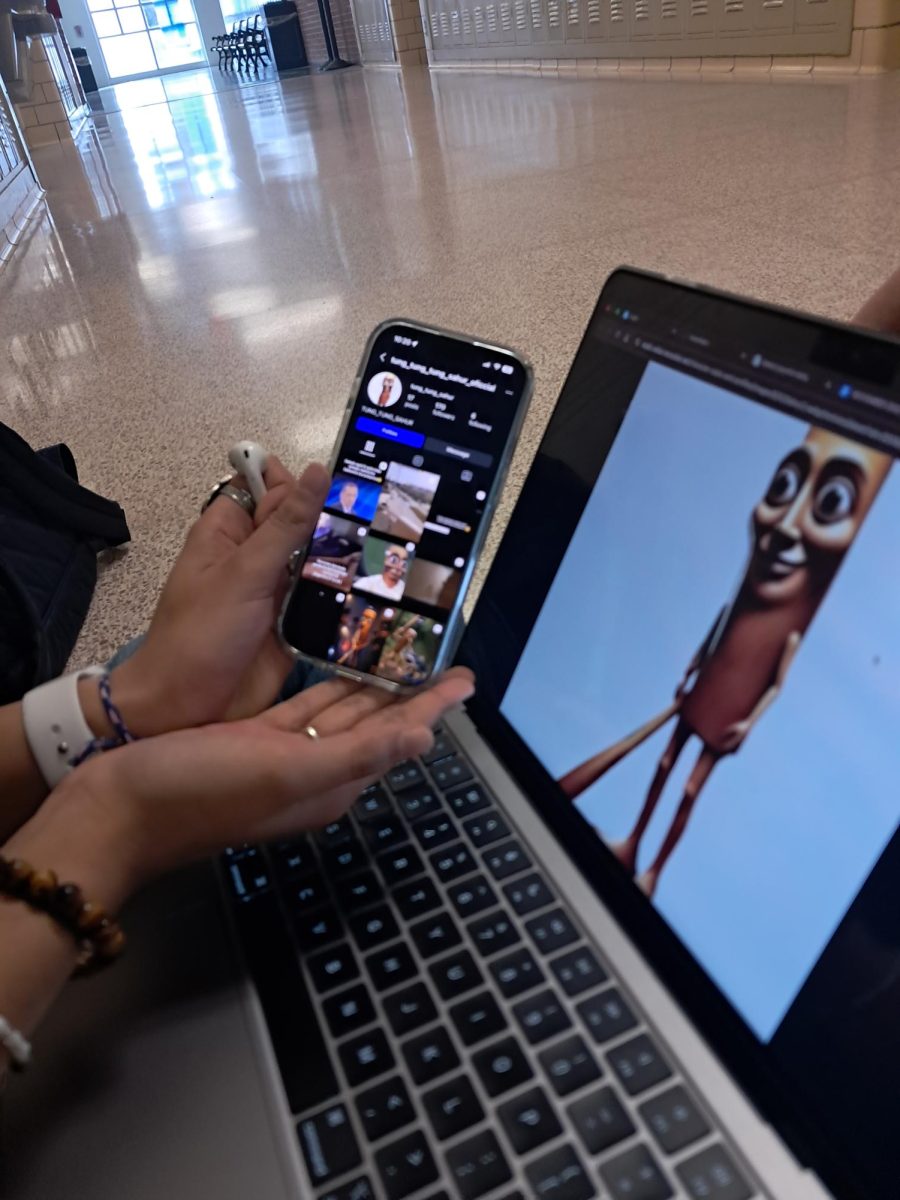
Scrolling through social media used to be just for fun and entertainment. But now it’s a distraction and affects classrooms and school environments.
Rather than focusing on school and upcoming tests and assignments, we are now more focused on what is trending.
The growing obsession with brainrot has changed the way we act, think, talk and even the way they learn. It affects our attention spans, learning and social skills.
If we do not fix this soon, it will affect the way we learn and our relationship with other people.
Brainrot culture is being spread rapidly. Social media apps like TikTok and Instagram are using algorithms to push out trending videos. As more videos get pushed out, we naturally get more addicted to social media.
The more you consume videos, the more you want to watch videos, and that’s where constant multitasking and overstimulation comes in.
Soon you could find yourself watching videos while studying, watching instead of interacting with people or scrolling while completing other tasks.
The more you watch videos and consume this type of content, the less productive you are, worsening your attention span.
If we are constantly scrolling, especially in the morning, our dopamine levels spike. Suddenly, any other task that’s less entertaining (like studying) seems boring and impossible.
Peer pressure also contributes to this addiction.
The constant pressure to be up to date with the latest memes, audios and trends has intensified. With new memes and trends coming out constantly, it’s hard to stay on top of everything.
This is why we stopped doing things like studying and interacting with friends, and started scrolling instead.
Brainrot, fueled by the rise of short form content, has a profound impact on learning and school environments.
The prevalence of brief, rapidly changing media has shortened our attention span, making it increasingly difficult for us to engage deeply with academic material.
This shift disturbs the classroom environment, as distracted students struggle to maintain focus, disrupting both our own learning and that of our peers.
Moreover, the widespread use of slang and the influence of brainrot contributes to a noticeable decline in English vocabulary, weakening students’ language skills and our ability to express complex ideas effectively.
On the social front, brainrot alters behavior and communication patterns among young people. Students begin copying online behaviors, adopting the casual, often superficial tone prevalent on social media platforms.
This change is evident in the evolution of humor, which tends to become less serious and more reliant on memes and catchphrases.
As conversations lose deputy, social bonds suffer, weakened by an overreliance on online interactions rather than meaningful face-to-face communication.
Brainrot presents significant challenges both academically and socially, eroding essential skills and relationships crucial for personal development and success in school.
Constant consumption of online content and endless scrolling through social media weaken attention spans and makes it harder to focus on more complex tasks.
This affects schoolwork and homework, and even thoughtful conversation, which should be worrisome to both students and parents.
Some suggestions to this issue include time limits and physical activity.
Establishing time limits can help to regulate phone use by kids. This type of regulation can encourage kids to take breaks or engage with their peers, creating healthier habits.
Promoting physical activity creates healthier, more productive mindsets for developing kids. Examples could include going to the gym, participating in a sport or even just walking a dog.
The effects of physical activity can go beyond phone addiction and even help with mental health and good sleep habits.
Social media is spreading brainrot rapidly. The effects are becoming obvious, and something has to be done. Our learning and daily habits are going to get worse if we don’t fix it. We can start by controlling our online consumption by setting time limits, turning off notifications and discovering hobbies and disconnecting.