The Washington Post laid off over 300 employees on Feb. 4. The paper is owned by billionaire Jeff Bezos, who ordered the cuts to cope with sizable financial losses.
Overall, around 30% of the entire Washington Post staff were laid off, eliminating the entire sports section, leaving journalists across the country disconcerted.
This is a continuation of the upheaval Bezos has imposed on the Post. Editorial presidential endorsements in the 2024 election were restricted by CEOs and billionaires like Jeff Bezos and the owner of the LA Times, Patrick Soon-Shiong. Both of these endorsements were planned to be in favor of Democratic nominee Kamala Harris and have raised questions over how free individual journalists are under the control of wealthy owners.
We shouldn’t have to tip-toe around the First Amendment. Under freedom of the press, we are supposed to have the right to publish freely and use our voice to influence and educate those around us.
Freedom of the press has also been under attack in regards to the recent crackdown on Immigration and Customs Enforcement.
For example, after Rümeysa Öztürk co-wrote a piece on the horrors inside of an ICE detention center, ICE Agents detained Öztürk in March of last year in Massachusetts, sparking further debate and concern over press freedom, or our voices as journalists. Öztürk was released a few weeks after the incident after spending weeks in a Louisiana Detention Center.
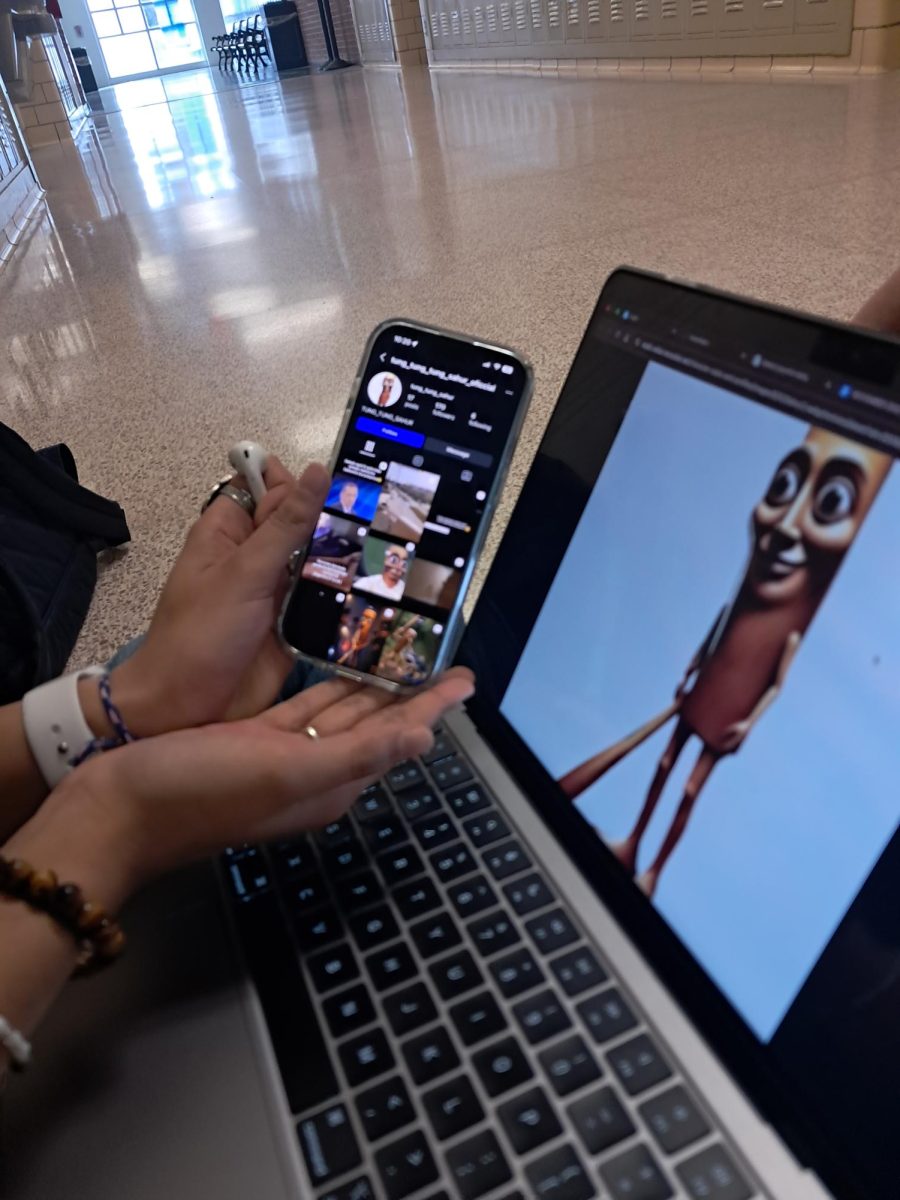
These incidents have led to much discourse over the effects of the phone ban on student journalists. The ban restricting the usage of phones from bell to bell was implemented after Loudoun County complied with the Virginia law.
Valley students walked into school wondering what notifications they would miss while we wondered how this would affect our passion for our online news publication and our school yearbook. Our publication staffs were at a standstill.
Not only did the ban strip us of phones. It restricted any personal device that could connect to the internet, meaning non-LCPS issued computers were also banned.
The effect this had on student journalists was staggering. With many websites being blocked by LCPS, we’ve been accessing necessary information and images for our pieces through personal devices. This is no longer possible because of those devices being restricted.
However, the use of our phones was the greatest loss. So many of us use our phones for our jobs here. Without them, we struggle with interviews, photography and research.
Lugging around computers instead of our phones is much more inconvenient, especially when using recording software for interviews. It is much more awkward to open our Chromebook in the middle of the hallway to interview a student or teacher. Not only does it take up time, but the software does not capture audio as well through these Chromebooks as it does on our cellular devices.
Cover art, the photo that adds a visual depiction of our pieces to the link online, also becomes inferior. We utilize our phone cameras to capture these pictures, and the Chromebook cameras are nowhere near the quality we require, leaving us disappointed with the new, lower-quality images.
As journalists, our job is to amplify the voices of those around us. But we are left wondering how to continue that job without the necessary materials.
In certain ways, we can relate to the fears of the Washington Post staff. The phone ban is taking many of our needed resources, leaving us distressed about the reporting of our work and the support behind it.
If we don’t write, nobody will know what’s happening around them. Journalists are the glue that holds civilization together. Journalists inform, educate and captivate. Journalists are the ones who tell you how to stay safe in the winter storms or who won the Grammys.
Even when it feels impossible, we must remember to stay strong and fight for our craft. We simply can’t forget the importance of what we do. The world will never not need us. This is especially relevant because we are at a time where the world’s political climate is more polarizing than ever, with studies showing journalists experiencing safety risks like harassment and violence during the 2024 presidential election.
Stories can be twisted, and media can be fabricated by the public in seconds. We get real quotes from reliable sources in order to seek the truth, allowing society to understand what really happened.
Throughout this, we have been left wondering what the future of Valley’s journalism would look like.
This was until LCPS came to our rescue. They alleviated our worries about the future of our journalism programs. We are so grateful that LCPS has worked with us to help continue our mission.
Within weeks we received an abundance of new materials for each and every journalism program here at Valley. This has allowed us to do what we do best: interview, photograph and record.
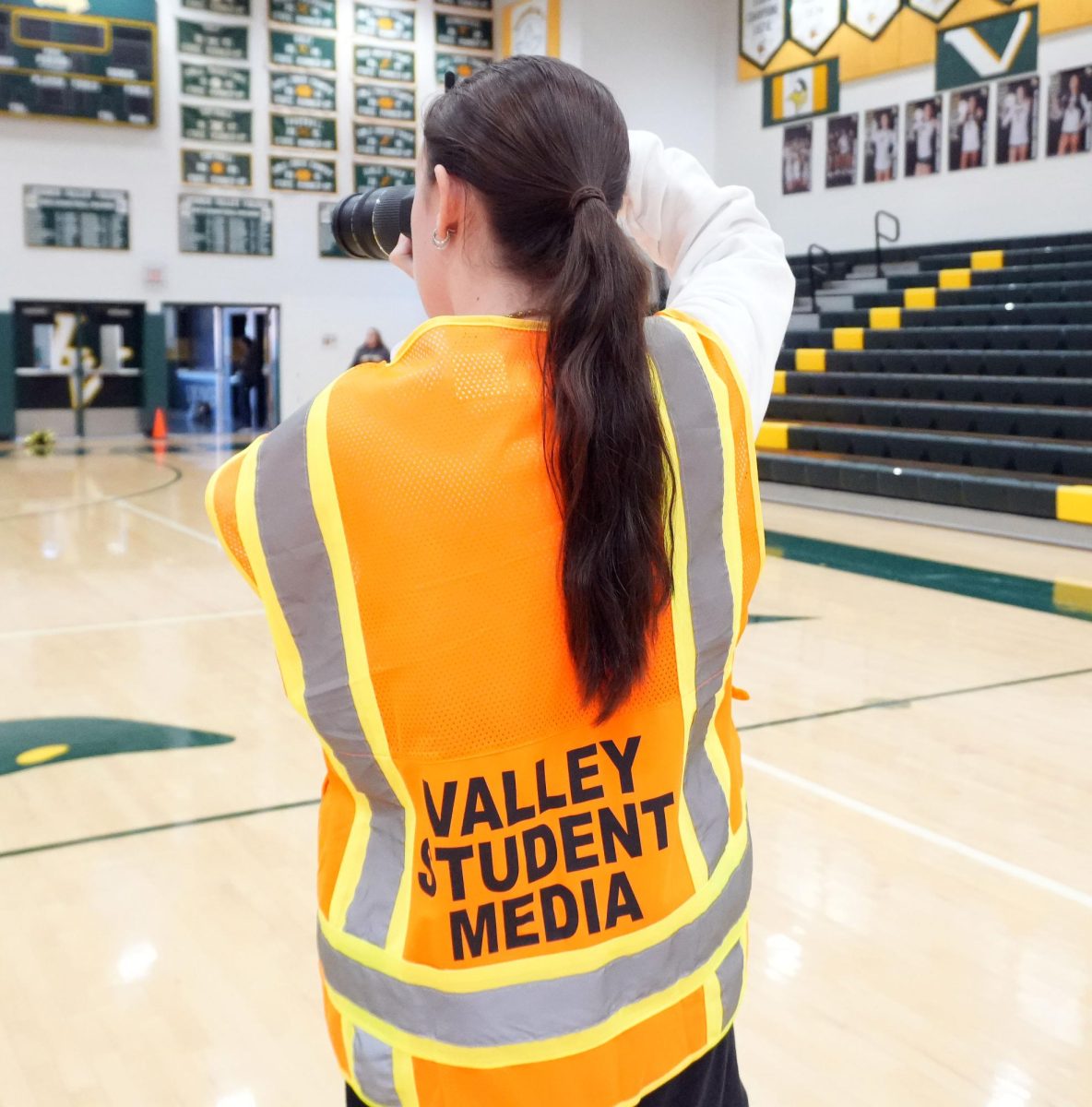
LCPS empowered us by providing us with new iPads, cameras, lenses, digital recorders and microphones. This filled in the gaps of what we lost from the personal device restrictions, allowing us to operate at our highest potential.
Cameras solve photo quality issues, microphones solve audio problems, and iPads help us to upload and record files and videos.
The division’s support allows our programs to thrive here at Valley and gives us the opportunity to engage and inform our readers about the next pep rally, protest, concert or sporting event and continue to punctuate the very groundwork of democracy: journalism.