Attending a four year college has always been the norm. But this trend is beginning to shift as more students choose alternative paths such as community college, trade school, gap years or the workforce.
One of the biggest reasons students are reconsidering traditional colleges is the rising cost of tuition. With student debt becoming a growing concern across the nation, many students are starting to look for more affordable options. Community colleges have become increasingly popular because they let students obtain access to courses at a lower cost before some students transfer to a university later or pick a different route.
Other students choose different paths because they are still uncertain about what they want to do in the future. Instead of spending thousands of dollars on a major they might not like in the end, some students prefer to take time and explore different paths.
Guidance counselor Shelli Cook said that students are choosing other paths for more stability.
“So rather than choose a school where they’re not entirely sure what they want to
major in, they can take some time to dabble in a few different areas,” Cook said.
Students are beginning to have a change in mindset as the trend to prioritize practicality rises.
Students might want something clear-cut and financially stable, whether that means going to a trade school or taking an untraditional route. A big part of this is the increasing tuition of universities around the country.
Senior Richard Diaz plans on taking a gap year after high school to focus on saving money.
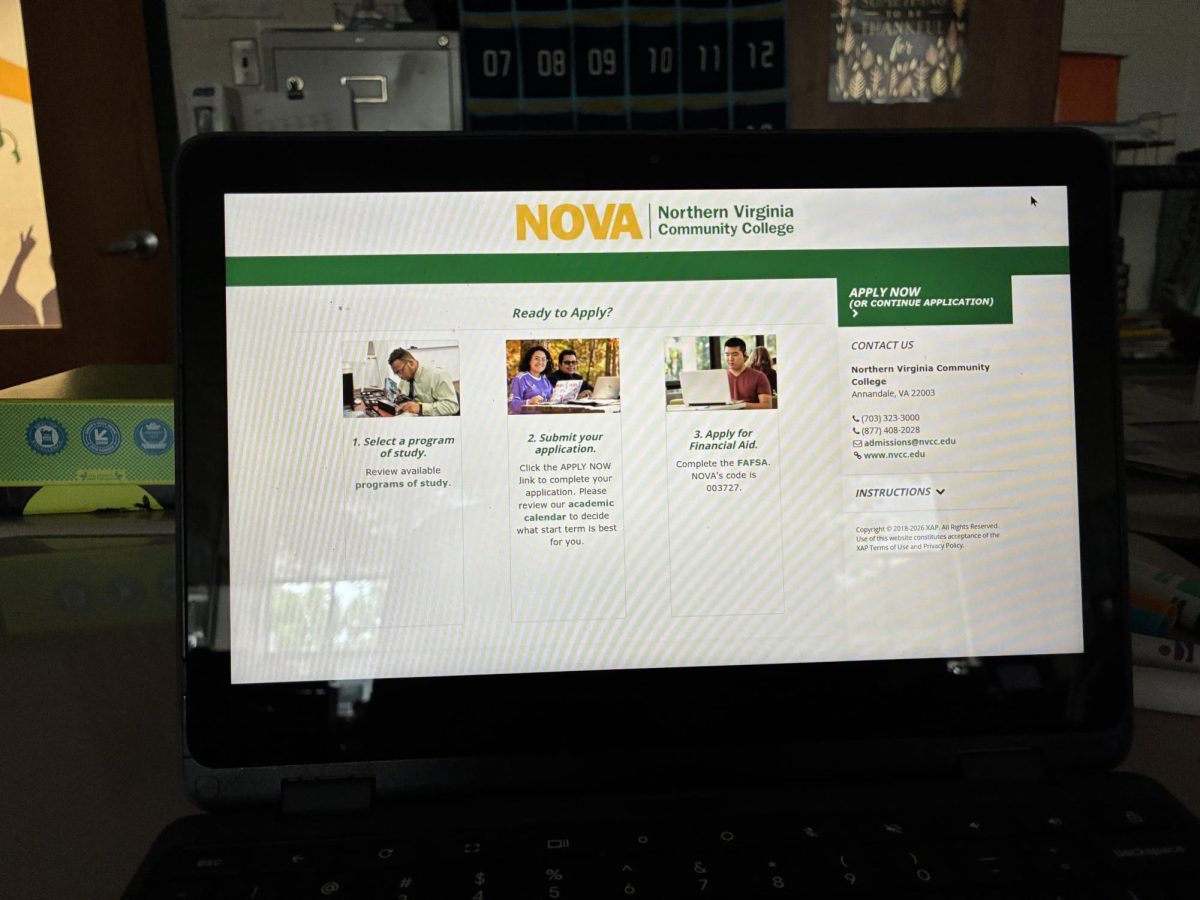
“I have a scholarship from both NOVA and GMU, but I still need to save some money for food, basically everything for my college,” Diaz said. “With a cheaper amount [lower tuition], I’d be able to save more money.”
Diaz’s practical decision is not an unpopular one, with many seniors following suit in more conservative approaches.
Students don’t want to waste useful time to pursue a path that isn’t for them. Especially in today’s job climate, employers value a certain set of skills rather than validation from a university.
Senior Emma Hazen explains her decision was to save money rather than spend time and resources on a choice she isn’t ready to make yet.
“I’m going to NOVA,” Hazen said. “I could have time to work and save money, and it’s much more affordable, and I really don’t know what I want to do after college, so I don’t want to waste money.”
Although the shift away from four-year colleges is occurring, traditional four year routes aren’t dying out anytime soon.
For senior Carter Anderson, the four year path makes sense.
“I’m going to JMU,,” Anderson said. “I want to be a math teacher, and I feel like JMU has a very, very strong education program, and I can be a good math teacher if I go there.”
The shift away from four year colleges is apparent, and for reasons from practicality to financial preservation, students are taking gap years, attending trade schools and going to community colleges.
In a time where inflation is skyrocketing and the job market is more competitive by the minute, students want to prioritize their future first.
“It would be an easier transition instead of going to a four year college,” Lopez said.