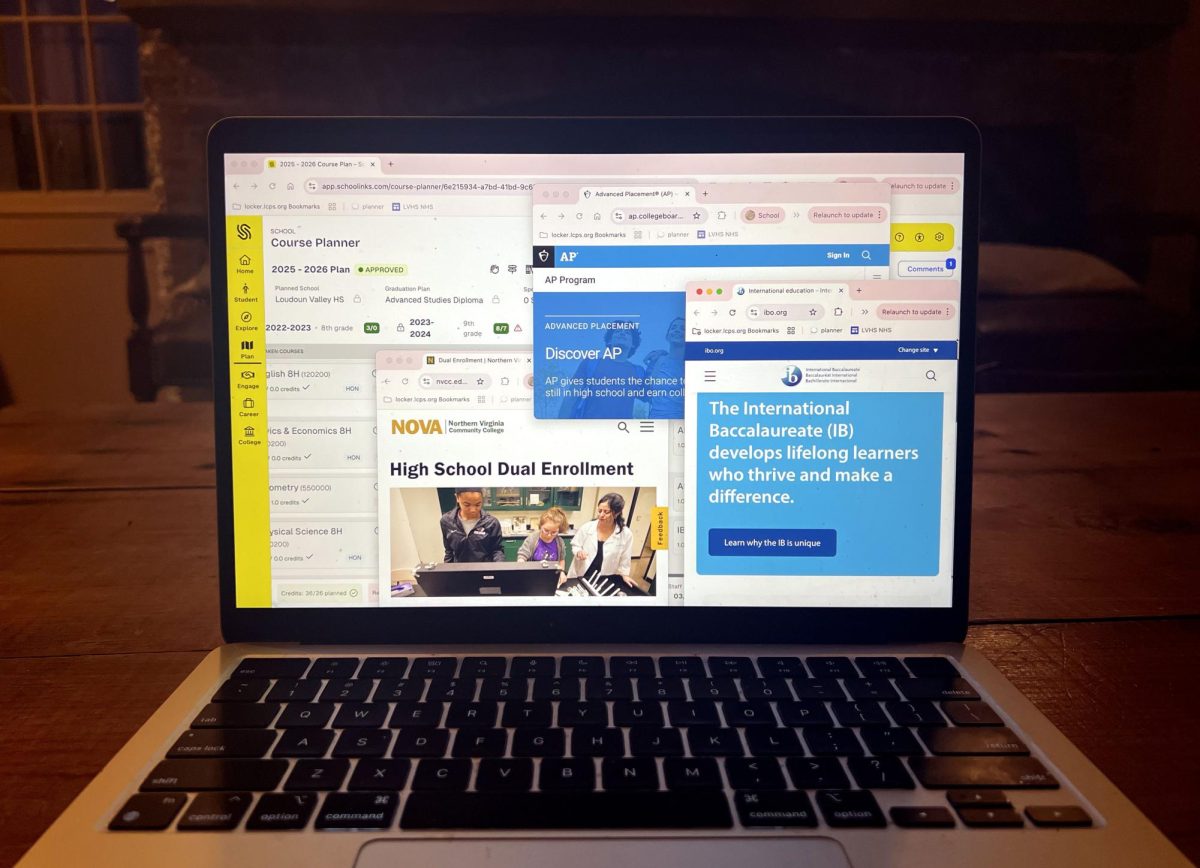

If you could travel back in time 25 years and you walked into a classroom, chances are it would look pretty different to what they look like now. No chromebooks, no promethean boards, no lcps go. There was a time where all of this newer technology wasn’t present, and there were far more physical homework and tests. But as time went on, these devices became essential for schoolwork. Just how much has schooling changed due to these devices and is it helpful in the eyes of teachers?
Chromebooks are handed out to every student, who are then allowed to take them home and access their schoolwork on websites such as schoology.
“When it comes to students, Chromebooks offer accessibility and affordability, which means more students can have a personal device to explore, create, and elaborate,” Jahid Joyner, who teaches Cybersecurity and Personal Finance, said.
With how accessible these devices are, the technology that comes with them such as AI has rapidly changed the way classrooms are shaped.
“The speed of computers and the internet have changed approaches in every classroom as well,” math and computer science teacher Rodney Snyder said. “I do feel that many of these AI tools, when used appropriately, can help us create brighter students who can find creative ways to solve problems.”
While important to recognize the significance of technology growth, it’s also important to not grow so reliant on them where doing your own work is harder. There are negatives to these tools and these negatives should not be overlooked.
“Its crucial to strike a balance,” Joyner said. “Technology should support learning, not replace thinking.”
Teachers do have mixed feelings about the new access to technology that students now have.
“Technology can support learning in wonderful ways. It provides access to resources, helps students stay organized, and makes communication easier,” English teacher Leslie Perry said. “I do think excessive technology use affects students’ mental health, focus and stress levels.”
While technology has its ups and downs, there’s no telling how that will affect how it advances in the future, or how classrooms will look in a few years.
“I think you will start to see teachers choose paper and pencil versions of some assignments/exams,” World History teacher Marshall Valentine said. “Not reverting to only paper versions but I think the rise of AI and the issues it creates with making sure students are doing their own work will push some teachers to go back to some of the older methods.”